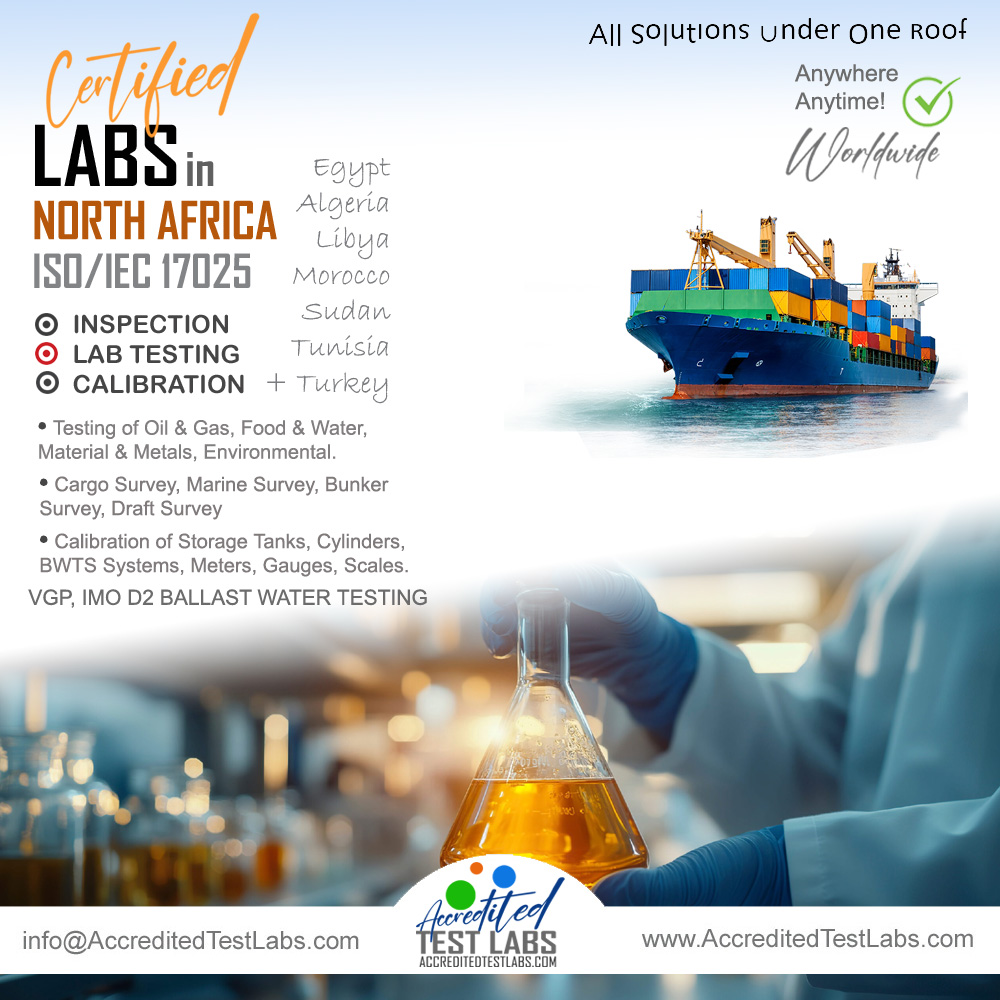
ISO CERTIFIED LABS SERVING NORTH AFRICA & WORLDWIDE! All Solutions Under One Roof! We are here to serve you with all accreditations across entire globe! Email: [email protected] Web: www.accreditedtestlabs.com Oil & Gas Testing, Food & Water Testing, Material and Metals Testing, Environmental Testing, Agri Products Testing & More… North Africa – Egypt, Algeria, Libya, Morocco, Sudan, Tunisia, Turkey Middle East – Far East – Africa – Europe – America – Australia – Asia Saudi Arabia | UAE | Bahrain | Kuwait | Qatar | Sudan | Egypt | Turkey | Lebanon | India | Pakistan | Sri Lanka and more..
ISO CERTIFIED LABS SERVING MIDDLE EAST & WORLDWIDE! We are here to serve you with all accreditations across entire globe! Email: [email protected] Web: www.accreditedtestlabs.com Oil & Gas Testing, Food & Water Testing, Material and Metals Testing, Environmental Testing, Agri Products Testing & More… Middle East – Far East – Africa – Europe – America – Australia – Asia Saudi Arabia | UAE | Bahrain | Kuwait | Qatar | Sudan | Egypt | Turkey | Lebanon | India | Pakistan | Sri Lanka and more.. #oiltesting #gastesting #foodtesting #watertesting #ballastwater #saudiarabia #fujairah #ISO17025 #labsinmiddleeast #uae #usa #europe #KSAlife #oman #qatar #bahrain #Kuwait #Houston #rotterdam
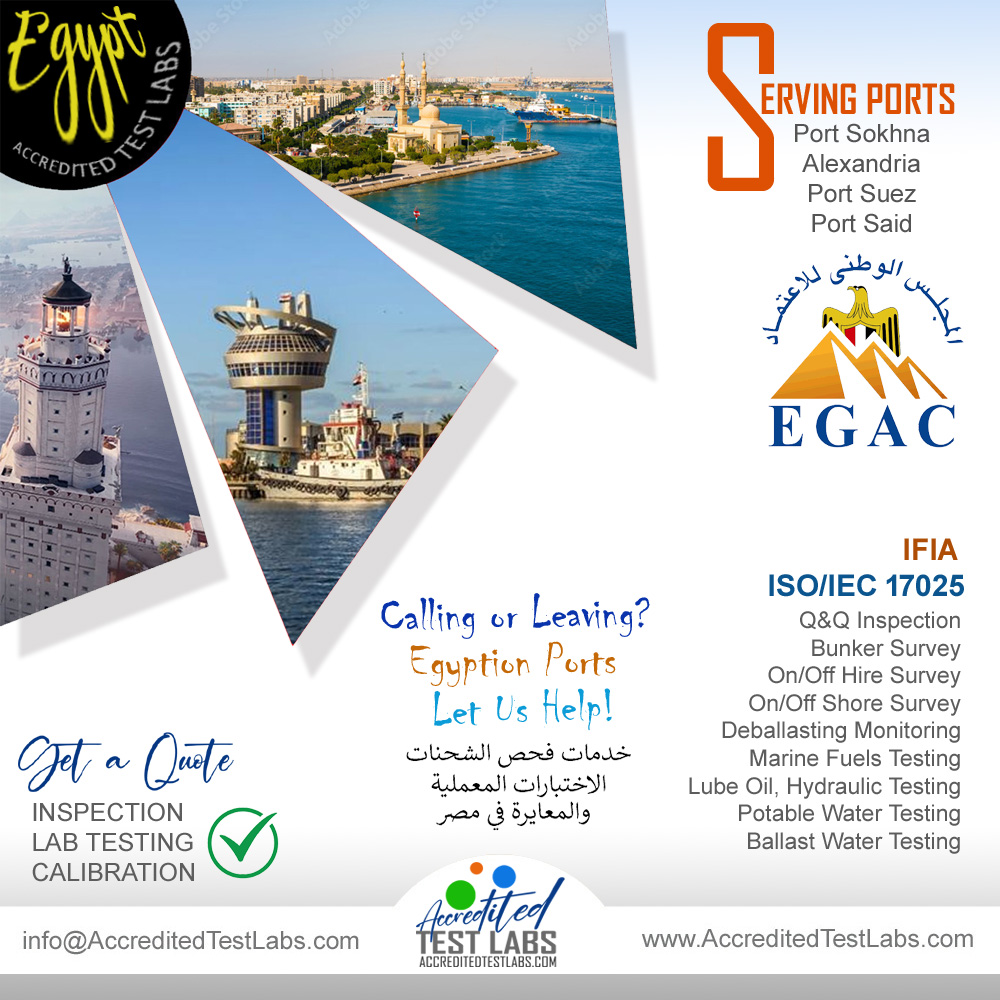
If you are looking for inspection, laboratory testing, and calibration services at Egyptian ports, you are at the right place as we support import/export cargo, marine operations, industrial equipment, as per International and local regulatory compliance.
Ballast water testing, potable water testing, Chemical, food, petroleum, environmental, metals, agricultural and industrial testing
Customs, manufacturers, traders
Calibration
Calibration of storage tanks, bwts systems, meters, gauges, weighing scales, measuring instruments, laboratory equipment, pressure, temperature, electrical and dimensional equipment
Egyptian Accreditation Council (EGAC)
Here how we are certified and accredited.
Egypt’s national accreditation body.
Accredits testing laboratories, calibration laboratories, and inspection bodies according to international standards such as ISO/IEC 17025 and ISO/IEC 17020. Moreover our branches are good standing members of IFIA. Additionally we are complying to HSE standards OHSAS, ISO 14001.
State of the art Services available at Egyptian ports
Cargo quality and quantity inspection
Pre-shipment inspection (PSI)
Draft surveys
Sampling and laboratory analysis
Petroleum and petrochemical testing
Marine Gasoil Testing/MGO, Lube Oil Testing
Food and agricultural product testing
Water and environmental testing
Ballast Water Testing
Container inspection
Tank calibration
Calibration of laboratory and industrial instruments
Marine safety equipment inspection
Certification and compliance reporting
Major Egyptian ports where these services are commonly available
Alexandria Port
Dekheila Port
Port Said
Damietta Port
Ain Sokhna Port
Suez Port
Safaga Port
If your interest is commercial procurement, vendor qualification, or finding an inspection company for a specific Egyptian port, we can accommodate all of your requisites therein.
Should you have any enquiries and looking for a competitive quote, feel free to contact us 24/7:
Get a Quote Today Instant response! [email protected] Middle East – Far East – Africa – Europe – America – Australia – Asia
TBC (Total Bacterial Count) and Legionella testing are two different types of microbiological water tests, each serving a different purpose.
1. TBC (Total Bacterial Count)
Also called:
Total Viable Count (TVC)
Heterotrophic Plate Count (HPC)
Purpose: Measures the total number of viable bacteria present in a water sample. It does not identify specific bacteria or indicate whether they are harmful.
Common uses:
Drinking water quality monitoring
Process water testing
Cooling towers
Hospital water systems
Food and beverage industries
Typical method:
Plate Count Agar (PCA) or similar media
Incubation at specified temperatures (commonly 22°C and/or 36–37°C) for defined periods
Results reported as CFU/mL (Colony Forming Units per milliliter)
Interpretation:
Low counts generally indicate good microbiological quality.
High counts may suggest poor sanitation, biofilm formation, or stagnation, but they do not necessarily indicate the presence of pathogens.
2. Legionella Testing
Purpose: Detects and quantifies bacteria of the genus Legionella, particularly Legionella pneumophila, which can cause Legionnaires’ disease.
Common sources tested:
Cooling towers
Hot and cold water systems
Hospitals
Hotels
Spa pools
Decorative fountains
Testing methods:
Method
Detects
Time to Result
Culture (ISO 11731)
Live Legionella
7–10 days
qPCR
Legionella DNA
Few hours to 1 day
Rapid antigen tests
Specific targets
Minutes to hours (limited use)
Results:
Reported as CFU/L for culture methods.
qPCR results are typically reported as genome copies per liter or similar molecular units, depending on the laboratory.
Comparison
Feature
TBC
Legionella
Measures
Total viable bacteria
Specific Legionella bacteria
Specificity
Non-specific
Highly specific
Indicates pathogens?
No
Yes
Typical unit
CFU/mL
CFU/L
Main purpose
General water hygiene
Public health risk assessment
Why both tests are often performed
A water system can have:
Low TBC but detectable Legionella, or
High TBC but no Legionella.
Because of this, TBC cannot be used to confirm or rule out the presence of Legionella. For systems with a risk of aerosol generation (such as cooling towers, healthcare facilities, hotels, and large building water systems), Legionella testing should be performed separately as part of a water safety management program.
If you’re working with a particular standard (such as ISO, WHO guidance, ASHRAE, or local regulations), the testing frequency and action limits may differ. I can also explain the relevant requirements for those standards.
Interested in Learning more about water testing, Visit our dedicated water testing services page: WATER TESTING
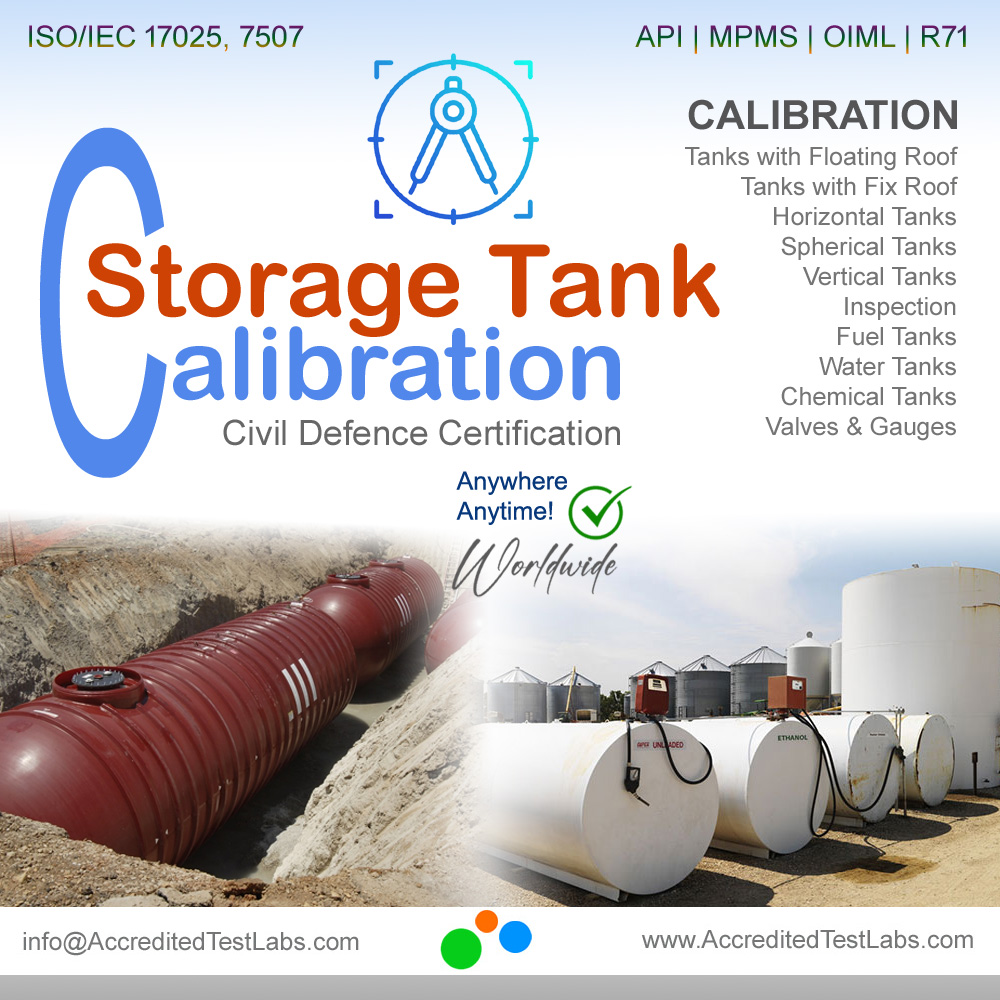
If you’re looking for storage tank calibration and Civil Defense certification, the requirements depend on the country, since Civil Defense authorities have different regulations. We at AccreditedTestLabs.com serve worldwide to facilitate with all local standards and specifications included but not limited to API MPMS Chapter 2, ISO 7507 series, and OIML R71 etc.
In many jurisdictions, the process typically involves:
Storage tank calibration
Measuring the tank’s capacity accurately.
Producing a calibration (strapping) table showing volume versus liquid level.
Performed using recognized standards (such as ISO, API, or OIML methods).
Usually carried out by an accredited calibration company.
Inspection
Verification of tank dimensions, construction, and condition.
Inspection of overfill protection, vents, gauges, and safety equipment if applicable.
Certification
The calibration company issues a calibration certificate and calibration tables.
If required by local regulations, the documents are submitted to the relevant Civil Defense or fire safety authority as part of the facility approval or renewal process.
Civil Defense approval
Civil Defense generally reviews fire and life safety compliance rather than performing the calibration itself.
Approval may require:
Calibration certificate
Tank drawings
Inspection reports
Fire protection system documentation
Site layout and emergency plans
Could you tell us which country you are referring to (for example, UAE, Saudi Arabia, Qatar, Oman, Bahrain, Pakistan, Egypt, America, Rotterdam, or another country)? The specific Civil Defense certification requirements vary by jurisdiction.