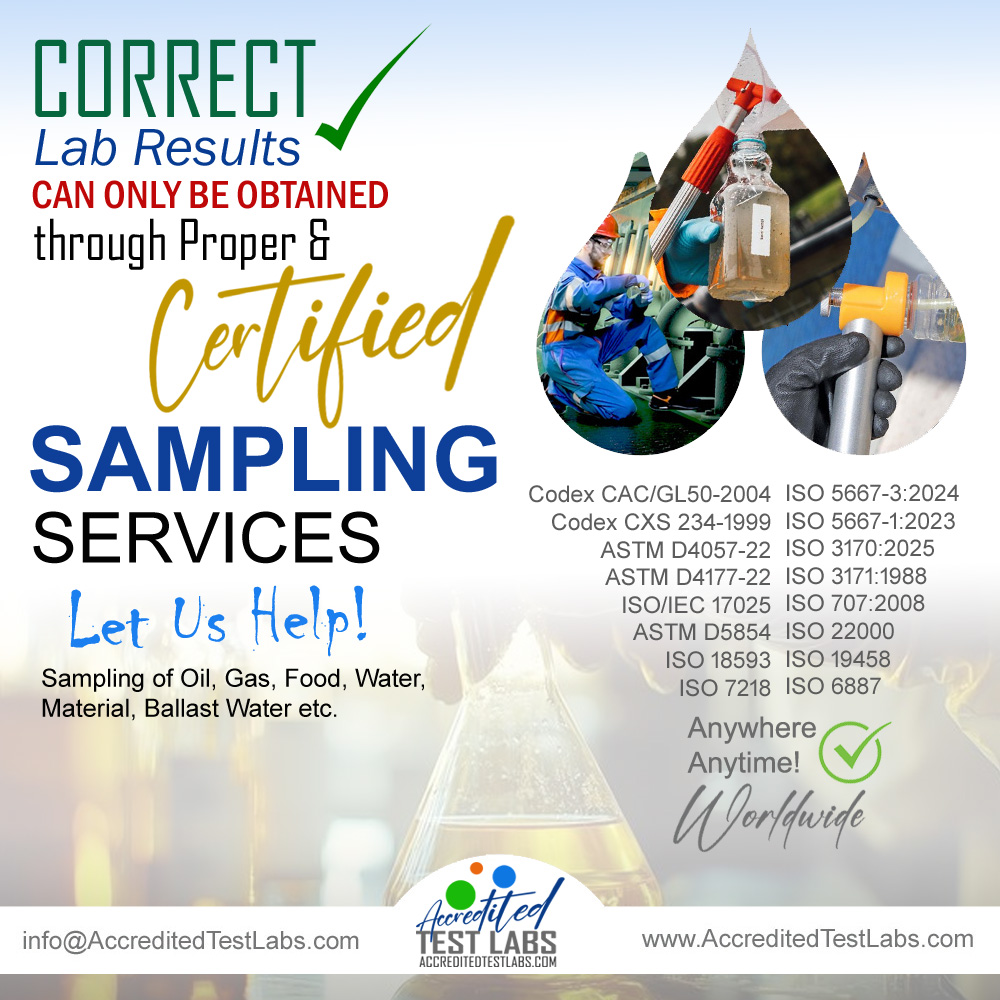
Sampling must have to be taken into account significantly to produce reliable results. No matter how modern techniques we are following in analysis or even if we are using the latest test equipment, all goes wasted if sampling is compromised.
Here is a small light thrown over aspects and results a poor sampling or sample handling can yield.
Poor sampling can lead to non-representative oil samples, giving results that do not reflect the actual condition of the oil.
Contamination during sampling can falsely increase parameters such as moisture, particles, metals, or acidity.
Improper sampling location may miss localized contamination or degradation.
Insufficient sample mixing can cause separation of contaminants and produce inconsistent results.
Exposure to air or moisture during sampling can alter oxidation, moisture, and other chemical test results.
Dirty or unsuitable sampling containers can introduce external contaminants and affect laboratory analysis.
Incorrect sample quantity may be insufficient for all required tests or affect test accuracy.
Improper storage or delayed testing can change the oil’s properties before analysis.
Incorrect labeling or identification can result in analysis being performed on the wrong sample or incorrect interpretation of results.
Overall effect: Bad sampling can produce false, misleading, or unreliable analytical results, leading to incorrect conclusions about oil quality and equipment condition.
We at AccreditedTestLabs.com, always ensure proper sampling and sample handling as per SOPs prescribed by national and International standards. Learn more about our sampling services, types, capability, and worldwide coverage here : – Professional Sampling Services
MGO (Marine Gasoil) is a high-quality, low-viscosity marine fuel used in ships. It is a distillate fuel, similar to automotive diesel, but formulated to meet marine engine requirements. Compared with heavy fuel oil (HFO), MGO is cleaner-burning, contains fewer impurities, and usually has much lower sulfur content.
What is MGO used for?
Marine gasoil is commonly used in:
Main and auxiliary marine diesel engines.
Ships operating in areas with strict emission regulations.
Port operations, where cleaner fuels are often required.
Smaller vessels, ferries, offshore vessels, and emergency generators.
Testing ensures the fuel is safe, compliant, and suitable for the engine. Poor-quality MGO can lead to engine damage, higher maintenance costs, and non-compliance with environmental regulations.
Key reasons for testing include:
Verify fuel quality
Confirms the fuel meets specifications such as the ISO 8217 marine fuel standard.
Ensures the supplied fuel matches what was purchased.
Protect engine components
Detects contaminants like water, sediments, or abrasive particles that can damage fuel pumps, injectors, and filters.
Check sulfur content
Verifies compliance with international and local emission limits.
Prevents penalties for using non-compliant fuel.
Prevent operational problems
Identifies issues that could cause poor combustion, excessive smoke, injector fouling, or engine knocking.
Detect contamination
Finds contamination from other fuels, lubricating oil, seawater, or chemicals that may have occurred during storage or bunkering.
Support warranty and dispute resolution
Independent test reports can help resolve fuel quality disputes between ship operators and fuel suppliers.
Common MGO tests
Test
Purpose
Density
Determines fuel quality and energy content.
Kinematic viscosity
Ensures proper fuel flow and injector performance.
Sulfur content
Checks environmental compliance.
Flash point
Confirms safe handling and storage.
Water content
Detects free or dissolved water that can cause corrosion and poor combustion.
Sediment/particulates
Identifies solid contaminants that can clog filters and wear components.
Cold Filter Plugging Point (CFPP) or Cloud Point
Evaluates low-temperature operability.
Cetane Index
Indicates ignition quality.
Ash content
Measures inorganic residues that can form deposits.
Lubricity
Ensures adequate protection for fuel injection equipment.
Acid number
Detects fuel degradation and corrosive compounds.
Microbial contamination
Checks for bacterial or fungal growth in storage tanks.
Typical testing sequence
Collect a representative fuel sample during bunkering or from the storage tank.
Send the sample to an accredited laboratory.
Compare the results with the applicable specification (such as ISO 8217) and the supplier’s fuel documentation.
Take corrective action if the fuel fails any critical parameter before using it extensively.
Confirms compliance with environmental regulations.
Improves fuel efficiency and engine reliability.
Helps avoid costly repairs, downtime, and fuel quality disputes.
In practice, MGO testing is a routine part of fuel quality assurance for commercial shipping and is especially important after bunkering, before long voyages, or whenever fuel contamination is suspected.
Should you have any testing requisites and looking for a competitive quote, feel free to contact us 24/7:
Get a Quote Today Instant response! [email protected] Middle East – Far East – Africa – Europe – America – Australia – Asia
For more information about full range of Oil and Gas Testing Services please visit our page Oil and Gas Testing
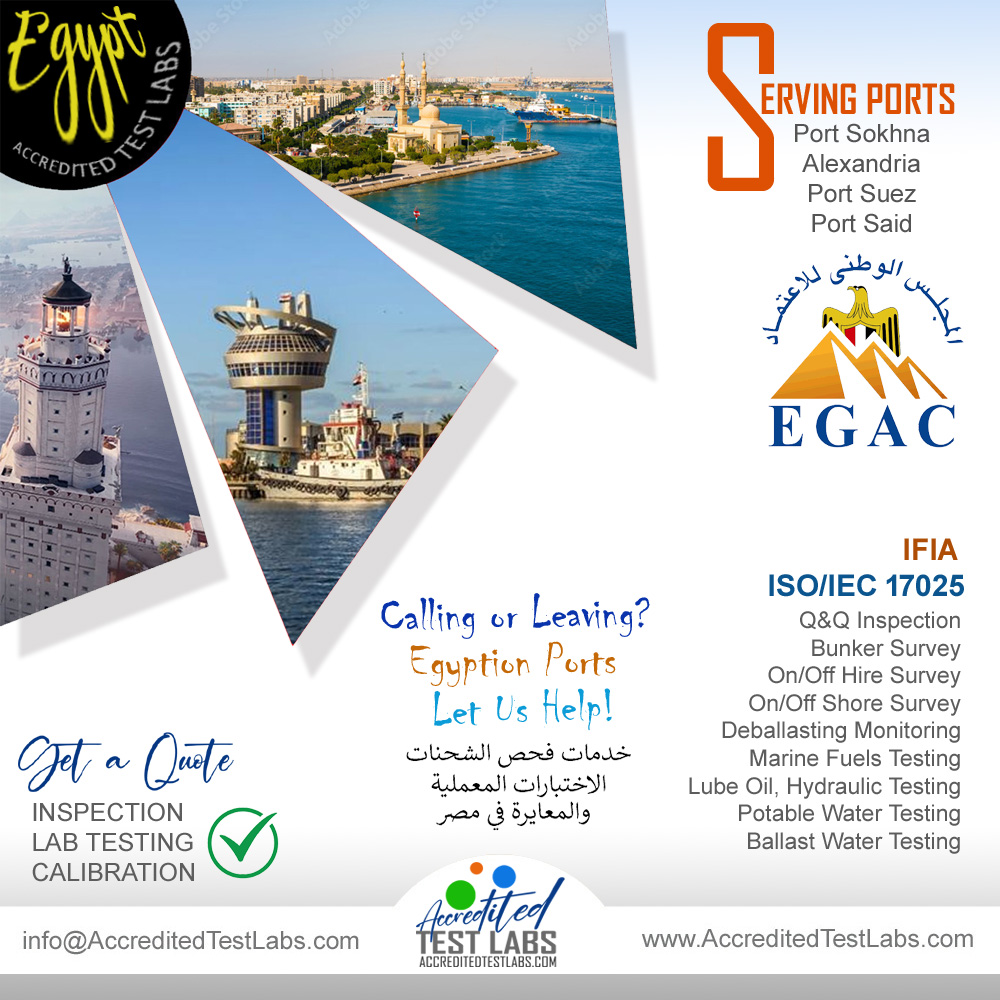
If you are looking for inspection, laboratory testing, and calibration services at Egyptian ports, you are at the right place as we support import/export cargo, marine operations, industrial equipment, as per International and local regulatory compliance.
Ballast water testing, potable water testing, Chemical, food, petroleum, environmental, metals, agricultural and industrial testing
Customs, manufacturers, traders
Calibration
Calibration of storage tanks, bwts systems, meters, gauges, weighing scales, measuring instruments, laboratory equipment, pressure, temperature, electrical and dimensional equipment
Egyptian Accreditation Council (EGAC)
Here how we are certified and accredited.
Egypt’s national accreditation body.
Accredits testing laboratories, calibration laboratories, and inspection bodies according to international standards such as ISO/IEC 17025 and ISO/IEC 17020. Moreover our branches are good standing members of IFIA. Additionally we are complying to HSE standards OHSAS, ISO 14001.
State of the art Services available at Egyptian ports
Cargo quality and quantity inspection
Pre-shipment inspection (PSI)
Draft surveys
Sampling and laboratory analysis
Petroleum and petrochemical testing
Marine Gasoil Testing/MGO, Lube Oil Testing
Food and agricultural product testing
Water and environmental testing
Ballast Water Testing
Container inspection
Tank calibration
Calibration of laboratory and industrial instruments
Marine safety equipment inspection
Certification and compliance reporting
Major Egyptian ports where these services are commonly available
Alexandria Port
Dekheila Port
Port Said
Damietta Port
Ain Sokhna Port
Suez Port
Safaga Port
If your interest is commercial procurement, vendor qualification, or finding an inspection company for a specific Egyptian port, we can accommodate all of your requisites therein.
Should you have any enquiries and looking for a competitive quote, feel free to contact us 24/7:
Get a Quote Today Instant response! [email protected] Middle East – Far East – Africa – Europe – America – Australia – Asia
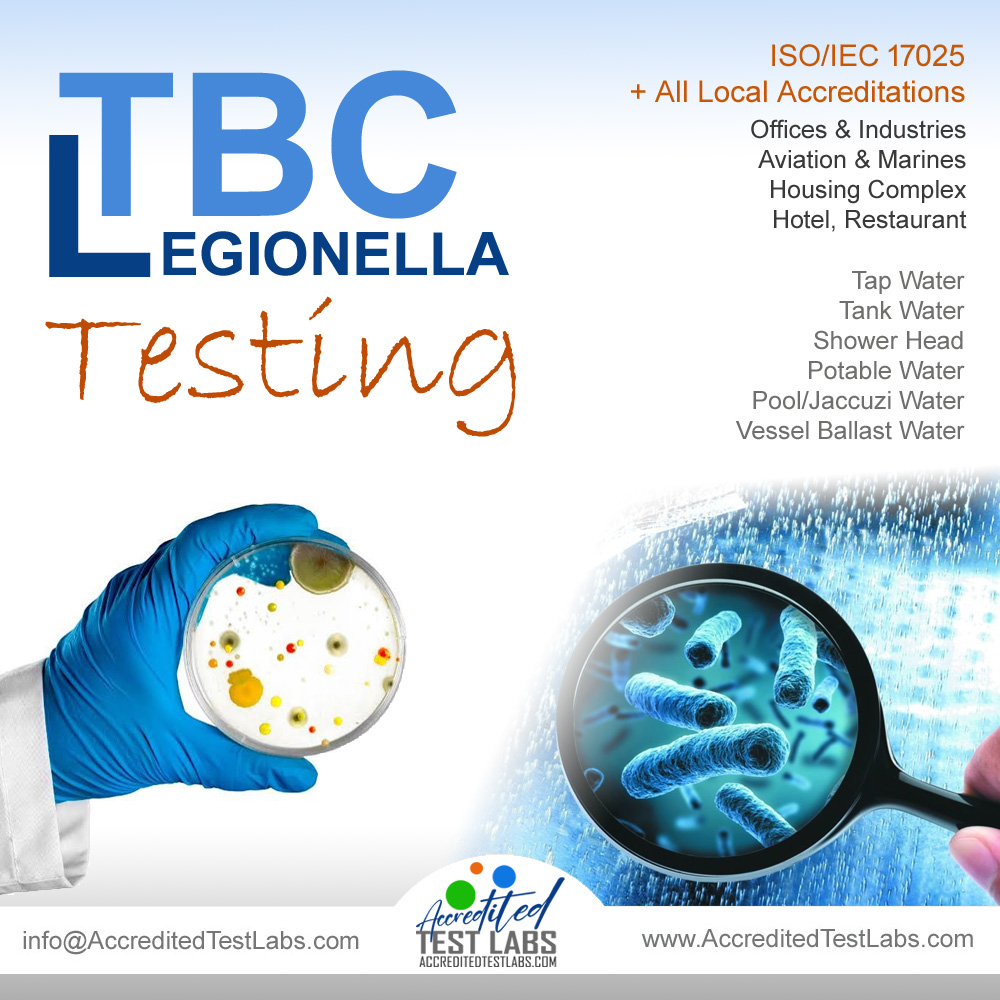
TBC (Total Bacterial Count) and Legionella testing are two different types of microbiological water tests, each serving a different purpose.
1. TBC (Total Bacterial Count)
Also called:
Total Viable Count (TVC)
Heterotrophic Plate Count (HPC)
Purpose: Measures the total number of viable bacteria present in a water sample. It does not identify specific bacteria or indicate whether they are harmful.
Common uses:
Drinking water quality monitoring
Process water testing
Cooling towers
Hospital water systems
Food and beverage industries
Typical method:
Plate Count Agar (PCA) or similar media
Incubation at specified temperatures (commonly 22°C and/or 36–37°C) for defined periods
Results reported as CFU/mL (Colony Forming Units per milliliter)
Interpretation:
Low counts generally indicate good microbiological quality.
High counts may suggest poor sanitation, biofilm formation, or stagnation, but they do not necessarily indicate the presence of pathogens.
2. Legionella Testing
Purpose: Detects and quantifies bacteria of the genus Legionella, particularly Legionella pneumophila, which can cause Legionnaires’ disease.
Common sources tested:
Cooling towers
Hot and cold water systems
Hospitals
Hotels
Spa pools
Decorative fountains
Testing methods:
Method
Detects
Time to Result
Culture (ISO 11731)
Live Legionella
7–10 days
qPCR
Legionella DNA
Few hours to 1 day
Rapid antigen tests
Specific targets
Minutes to hours (limited use)
Results:
Reported as CFU/L for culture methods.
qPCR results are typically reported as genome copies per liter or similar molecular units, depending on the laboratory.
Comparison
Feature
TBC
Legionella
Measures
Total viable bacteria
Specific Legionella bacteria
Specificity
Non-specific
Highly specific
Indicates pathogens?
No
Yes
Typical unit
CFU/mL
CFU/L
Main purpose
General water hygiene
Public health risk assessment
Why both tests are often performed
A water system can have:
Low TBC but detectable Legionella, or
High TBC but no Legionella.
Because of this, TBC cannot be used to confirm or rule out the presence of Legionella. For systems with a risk of aerosol generation (such as cooling towers, healthcare facilities, hotels, and large building water systems), Legionella testing should be performed separately as part of a water safety management program.
If you’re working with a particular standard (such as ISO, WHO guidance, ASHRAE, or local regulations), the testing frequency and action limits may differ. I can also explain the relevant requirements for those standards.
Interested in Learning more about water testing, Visit our dedicated water testing services page: WATER TESTING
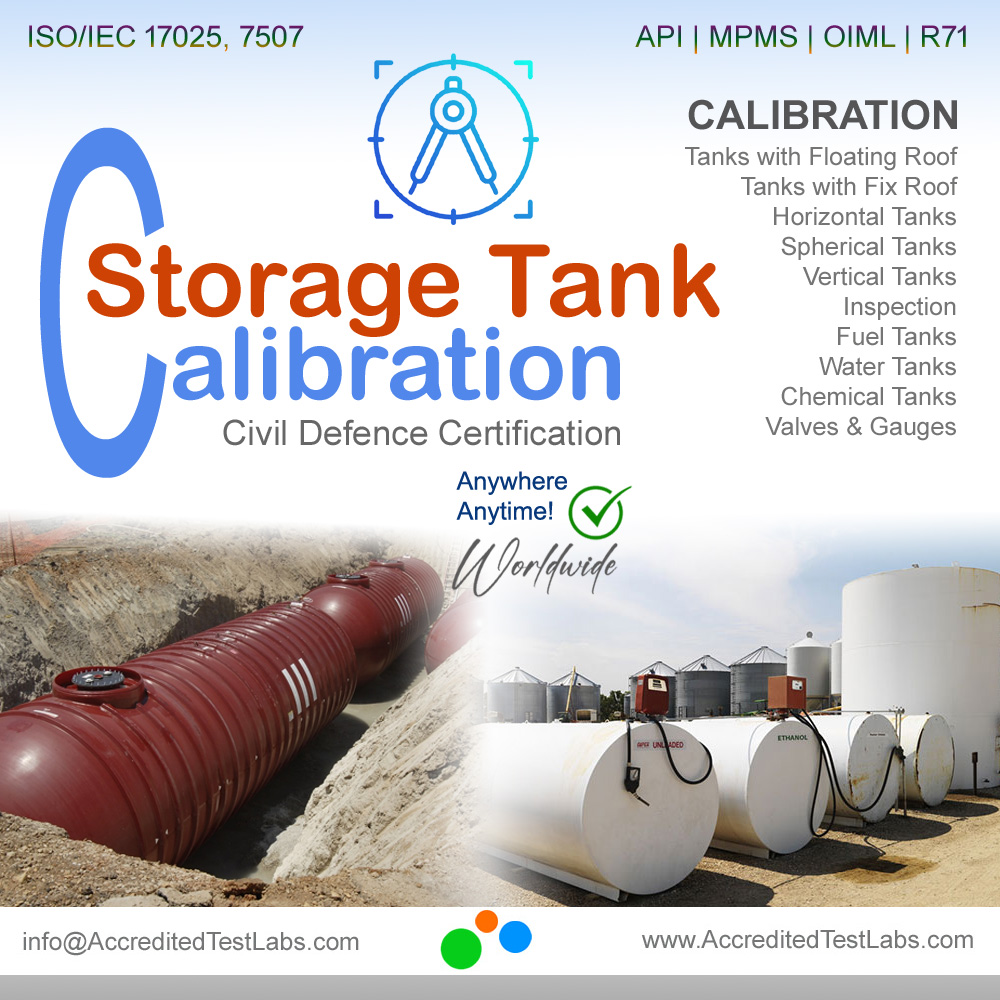
If you’re looking for storage tank calibration and Civil Defense certification, the requirements depend on the country, since Civil Defense authorities have different regulations. We at AccreditedTestLabs.com serve worldwide to facilitate with all local standards and specifications included but not limited to API MPMS Chapter 2, ISO 7507 series, and OIML R71 etc.
In many jurisdictions, the process typically involves:
Storage tank calibration
Measuring the tank’s capacity accurately.
Producing a calibration (strapping) table showing volume versus liquid level.
Performed using recognized standards (such as ISO, API, or OIML methods).
Usually carried out by an accredited calibration company.
Inspection
Verification of tank dimensions, construction, and condition.
Inspection of overfill protection, vents, gauges, and safety equipment if applicable.
Certification
The calibration company issues a calibration certificate and calibration tables.
If required by local regulations, the documents are submitted to the relevant Civil Defense or fire safety authority as part of the facility approval or renewal process.
Civil Defense approval
Civil Defense generally reviews fire and life safety compliance rather than performing the calibration itself.
Approval may require:
Calibration certificate
Tank drawings
Inspection reports
Fire protection system documentation
Site layout and emergency plans
Could you tell us which country you are referring to (for example, UAE, Saudi Arabia, Qatar, Oman, Bahrain, Pakistan, Egypt, America, Rotterdam, or another country)? The specific Civil Defense certification requirements vary by jurisdiction.
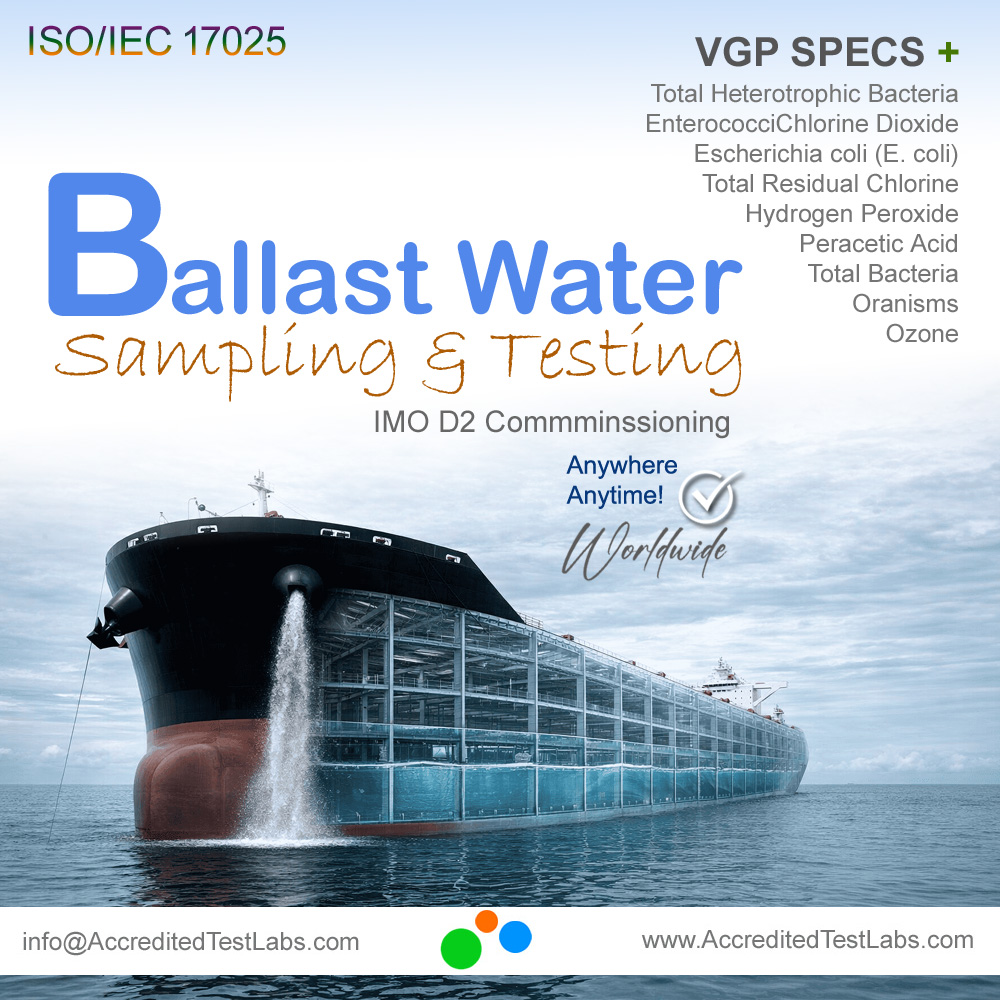
Ballast Water Testing as per VGP / IMO D-2 Commissioning
Ballast Water Management System (BWMS) commissioning testing is performed after installation (or after major modification/repair) to verify that the system is correctly installed and operating in accordance with the IMO D-2 discharge standard. Since 1 June 2022, biological commissioning testing has been mandatory under the IMO Ballast Water Management Convention. I Imo Rules +1
Purpose The commissioning test confirms that the BWMS:
Is installed correctly. Operates mechanically, electrically, and biologically as intended. Produces treated ballast water that indicates compliance with the IMO D-2 standard. It is not a repeat of type-approval testing. I Imo Rules +1 IMO D-2 Discharge Standard The treated ballast water must meet the following limits:
Parameter D-2 Limit Organisms ≥50 µm Less than 10 viable organisms/m³ Organisms 10–50 µm Less than 10 viable organisms/mL Vibrio cholerae Less than 1 CFU/100 mL Escherichia coli Less than 250 CFU/100 mL Intestinal Enterococci Less than 100 CFU/100 mL
Commissioning Test Procedure Complete BWMS installation and operational checks. Ballast using local ambient water. Operate the BWMS under normal operating conditions. Collect representative discharge samples. Analyze biological samples using an approved laboratory or recognized testing organization. Submit the results to the attending surveyor/classification society for verification. I ImoRules +1 VGP (US EPA Vessel General Permit) For vessels operating in U.S. waters:
The BWMS must comply with U.S. regulatory requirements in addition to IMO requirements. Sampling and testing may be conducted to demonstrate compliance with ballast water discharge requirements, depending on the applicable permit and U.S. Coast Guard requirements. I International Maritime Organization +1 Documents Required Ballast Water Management Plan (BWMP) Ballast Water Record Book BWMS Type Approval Certificate Commissioning Test Report International Ballast Water Management Certificate (after successful survey)
Efficacy testing of disinfectants as per regulatory bodies like the EPA, FDA, and AOAC those strictly define these variables to ensure that disinfectants perform reliably in real-world environments.
1. Key Disinfectant Testing Parameters
To prove a disinfectant works, researchers must carefully control and document several critical environmental and chemical variables. Even a slight change in these parameters can cause a disinfectant to fail.
Contact Time:
Concentration (Dilution):
Organic Soil Load:
Water Hardness:
Temperature & pH:
Neutralization Validation:
2. Standardized Disinfectant Test Methods
Standardized test methods are categorized by how the microbes and disinfectants are brought into contact.
A. Carrier Tests (Surface Testing)
These tests simulate a non-porous hard surface in the real world.
How it works: Microorganisms are inoculated onto a “carrier” (such as a stainless steel disk, glass slide, or penicylinder) and allowed to dry. The carrier is then submerged in or sprayed with the disinfectant for the specified contact time.
Key Standard:
AOAC Use-Dilution Method (AOAC 955.14/15): The gold standard for registering hospital-grade disinfectants with the EPA. It uses stainless steel cylinders carrier.
ASTM E2197 (Quantitative Disk Carrier Test): A quantitative method that allows researchers to calculate the exact log-reduction of bacteria, viruses, or fungi on a disk surface.
B. Suspension Tests
These tests assess the performance of a disinfectant when mixed directly with liquid pathogens.
How it works: A liquid culture of the test microbe is added directly to a tube containing the diluted disinfectant. After the contact time, a sample is withdrawn, neutralized, and plated to count survivors.
Key Standard:
EN 1276 / EN 13727 (European Standards): Quantitative suspension tests used extensively in Europe to evaluate bactericidal activity in medical and food-service fields.
Phenol Coefficient Test (Historical): Compares the disinfectant’s efficacy directly against phenol. While mostly obsolete today, it laid the groundwork for modern suspension testing.
C. In-Use / Practical Tests
These evaluate disinfectants under actual working conditions rather than highly controlled laboratory environments.
How it works: Swabs are taken from clinical or manufacturing surfaces before and after a routine disinfection cycle to determine if the disinfection protocol is actually working in practice.
In-Use Contamination Test: Tests whether a drum or bottle of disinfectant currently being used in a hospital has itself become contaminated with resistant microbes.
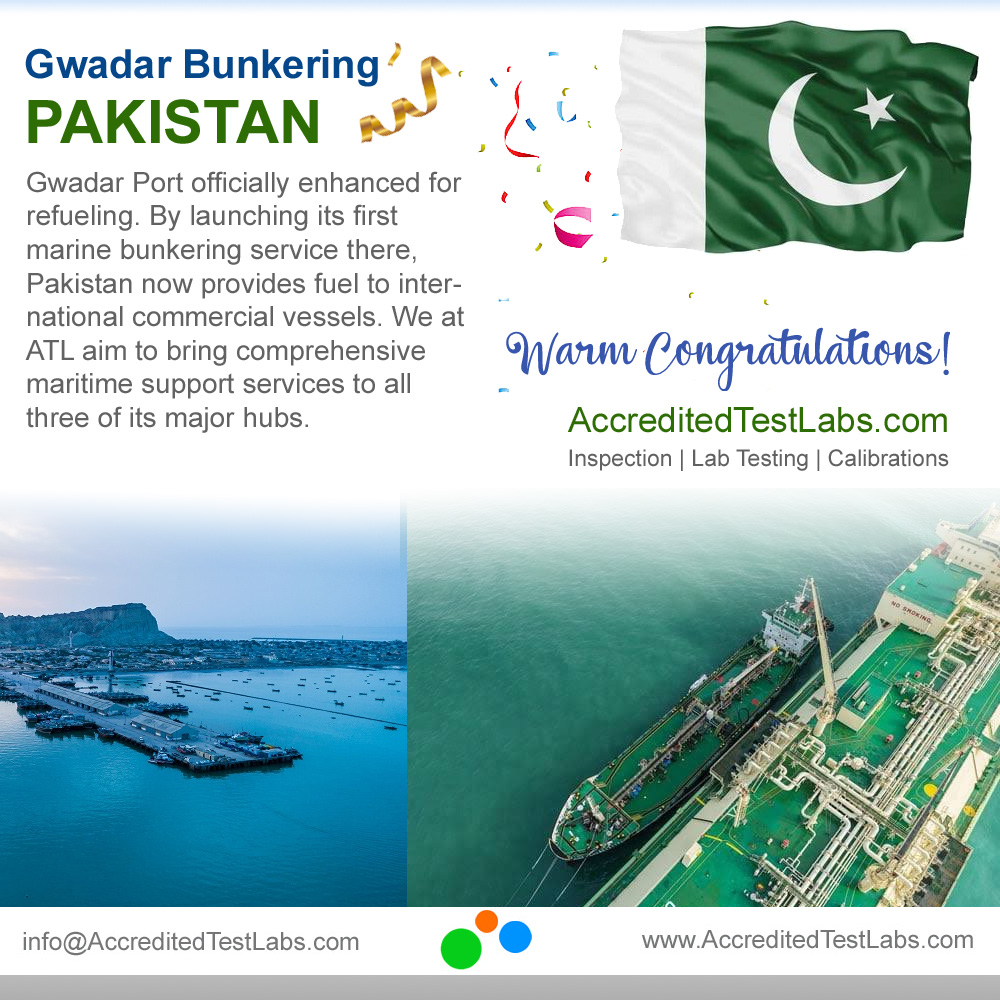
Gwadar Port is officially open for refueling. By launching its first marine bunkering service there, Pakistan now provides fuel to international commercial ships and successfully brings comprehensive maritime services to all three of its major hubs.
We are glad to serve through our IFIA and ISO Certified Inspection Lab Testing, and Calibration Services. Container Survey, Bunker Survey, Q&Q Survey, Draft Survey Onshore/Offshore Survey, On hire/Off hire Survey Email: [email protected] Middle East – Far East – Africa – Europe – America – Australia – Pakistan Saudi Arabia | UAE | Bahrain | Kuwait | Qatar | Sudan | Egypt | Turkey | Lebanon | India | Pakistan | Sri Lanka and more.. #cargoinspection #Gwadar #bunkersurvey #inspection #gawadarport #surveyorsinhouston #ROTTERDAM #fujairah #rastanura #Egypt #Pakistan
Serving you with our state of the art analytical service for the testing of Seafood, Non seafood, Cooked food, dairy food, bakery food, and agricultural products. Our laboratories are certified by local bodies and accredited by International standards include ISO 9001-2008/2015, ISO/IEC 17025.